
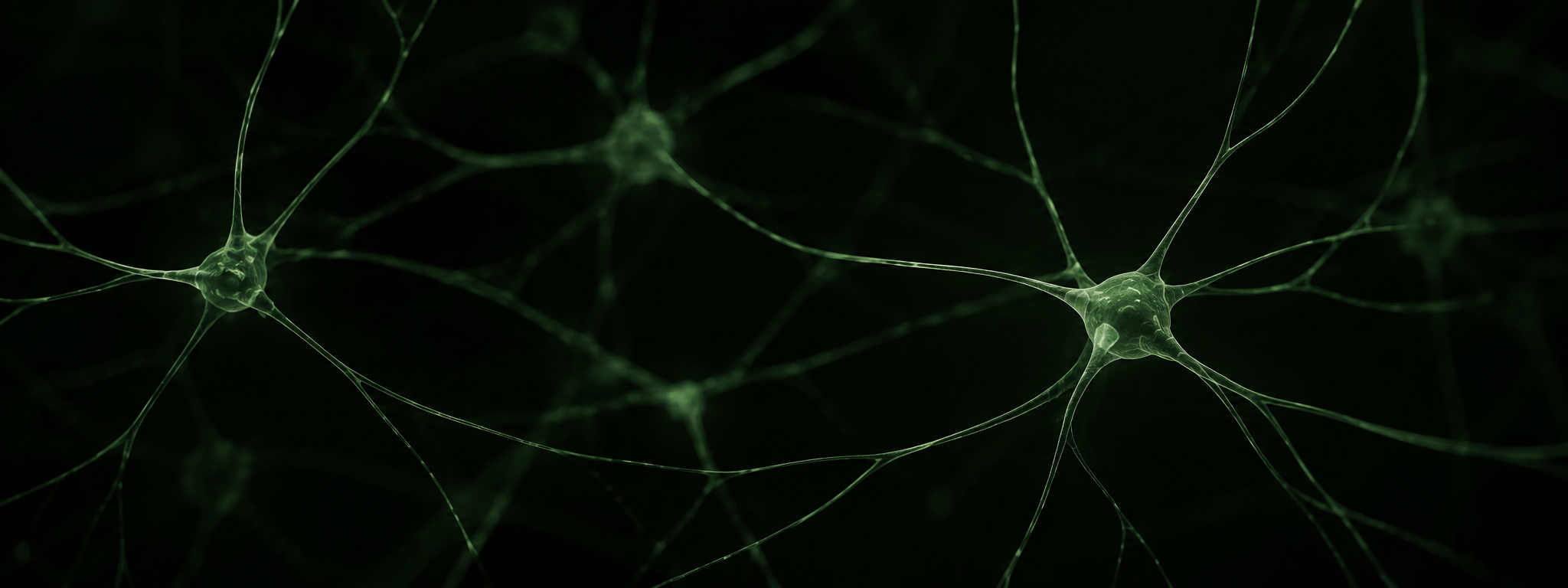
scientists have successfully grown human neurons in a lab, connected them to a silicon chip and taught them to play video games…
the company behind this is called Cortical Labs, an Australian biotech company working on biological computing, which involves using living neural networks as part of computer hardware
and they’ve recently opened a biological data centre in Melbourne containing 120 devices, each incorporating around 200,000 living human neurons - providing biological computing power that you can rent remotely
what a time to be alive
how do you make a computer out of brain cells
the basic idea involves growing human neurons - an organoid - from stem cells and placing them onto a silicon chip containing an array of microscopic electrodes
these electrodes provide an interface between the biological neurons and computer hardware, so you can then deliver electrical signals to the cells and record how their activity changes in response
in a biological computer, information from software is translated into patterns of electrical stimulation delivered to the neural network, then the electrical activity produced by the neurons is recorded, processed and translated back into an output
essentially you have a population of living neurons interacting with a digital environment through an electrical interface
what makes this interesting is the ability of neural networks to adapt their activity in response to stimulation and feedback, a property that guides learning and memory in real brains
Cortical Labs has been experimenting to understand whether this adaptability can be used to perform computational tasks
they taught them to play pong
back in 2022, researchers at Cortical Labs published a paper in Neuron describing an experiment called DishBrain, where they connected cultured human and mouse neurons to a simulated game of Pong
the neurons were grown on a multielectrode array, which allowed researchers to stimulate different regions of the culture depending on the position of the ball in the game
the electrical activity generated by the neurons was then used to control the paddle, meaning the neural network could influence what happened in the game and receive new sensory information as a consequence
the researchers also manipulated the feedback the neurons received depending on the outcome of their actions, using different patterns of electrical stimulation when the paddle successfully intercepted the ball or missed it
over repeated interactions, the neural cultures demonstrated changes in their activity - and improved performance on the task
the researchers interpreted this as evidence of adaptive, goal-directed behaviour in a simplified biological neural system
there are some limitations here - particularly whether you can say these changes reflect the same processes involved in learning in a fully intact brain
but the experiment demonstrated that living neurons could be incorporated into a real-time feedback system and produce behaviour that changed with experience
which is already quite mental
then they taught them to play doom
they’ve also demonstrated neural cultures interacting with Doom, extending the same general principle used in the Pong experiments to a more complicated digital environment
and now they’ve built a biological computer
since the original DishBrain experiment, Cortical Labs developed a device called the CL1, which incorporates approximately 200,000 living human neurons grown on a silicon chip
the system includes the hardware required to maintain the cells, deliver electrical stimulation, record neural activity and interface with software
they also developed a programming interface to interact with these neural networks remotely, sending inputs and receiving outputs through the cloud
in 2026, Cortical Labs opened a prototype biological data centre in Melbourne containing 120 CL1 units
so there is now an actual facility housing living neural networks that people can remotely interact with as computational hardware
however
it’s worth being precise about what these demonstrations establish
the neurons are receiving and responding to electrical information through an engineered interface, and researchers can use their activity to influence software behaviour, but this doesn’t establish that the cultures understand the games or possess anything resembling human cognition
the extent to which these systems can reliably learn, generalise and outperform conventional computational approaches is still being investigated
why would you make a computer out of brain cells
one of the more interesting questions here is whether the properties that make biological neural networks useful for learning and adaptation could eventually be exploited in computing
biological neurons are capable of complex information processing through the interaction of electrical signalling, synaptic transmission and changes in network connectivity
these processes emerge from physical and biochemical mechanisms that are fundamentally different from those used in conventional digital processors
researchers working in biological computing are interested in whether living neural networks could offer useful capabilities in areas such as adaptive control, pattern recognition and information processing, particularly where a system needs to respond to changing inputs
there is also considerable interest in the energy efficiency of biological nervous systems, although claims that biological computers will necessarily be more energy efficient than silicon-based systems remain speculative, especially when the infrastructure required to keep living cells alive is taken into account
applications
and there are some genuinely interesting neuroscience applications here too
if researchers can create reproducible neural systems that respond to inputs, adapt their activity and produce measurable outputs, they potentially have a new experimental platform for investigating neural plasticity, information processing and the effects of drugs or disease on network function
of course these cultures are enormously simplified compared with an intact human brain
they lack the organised anatomy, sensory systems, extensive connectivity and physiological environment that support cognition in humans, and there is currently no convincing evidence that the neural cultures used in these devices are conscious
but there are still some quite fundamental questions emerging from this work about how much of the computational behaviour we associate with nervous systems can arise from relatively small populations of neurons interacting with their environment
and whether those properties can be reliably harnessed for practical computing
where does this go
at the moment biological computing remains an emerging research field, and there are significant technical challenges around maintaining viable neural cultures, achieving reproducible behaviour, scaling systems and demonstrating useful computational performance
the CL1 is an interesting development because it provides a more standardised platform for researchers to experiment with living neural networks and makes those systems accessible through conventional programming tools
it also means that experiments which previously required highly specialised laboratory equipment can increasingly be carried out remotely
i think the most fascinating part of all this is the possibility of studying biological learning and information processing through systems where we can directly manipulate the information neurons receive, observe how their activity changes and measure the consequences of those changes in real time
we’ve spent decades studying how the brain processes information and trying to reproduce some of those principles in artificial neural networks
and now we’re beginning to incorporate living neural tissue directly into computational systems
i’m very interested to see what comes out of this over the next few years x
further reading
Cortical Labs, research and technology
https://www.corticallabs.com/research
Wired (2026), AI Is Dead. Organoids Are Alive.
https://www.wired.com/story/organoids-lab-grown-brains-neural-networks
Euronews (2026), Can brain cells run computers? This startup powers data centres using human neurons
Kagan et al. (2022), In vitro neurons learn and exhibit sentience when embodied in a simulated game-world, Neuron
https://doi.org/10.1016/j.neuron.2022.09.001
Hogan et al. (2026), CL API: Real-Time Closed-Loop Interactions with Biological Neural Networks